Varun Madathil

Assistant Professor / New Jersey Institute of Technology

Publications

Publication list grouped by year

2026

  1. A Linear Operator Framework for Polynomial Divisions in Cryptography

    Varun Madathil, Arnab Roy, Konstantinos Chalkias, Charanjit S. Jutla, Jonas Lindstrøm. AsiaCCS, 2026.

    • Cryptographic Protocols
    TL;DR

    Can we make the polynomial-division bottleneck in succinct proofs and polynomial commitments faster and more memory-efficient?

    We show a unified method using conjugate representations of derivatives and point-wise division under the discrete Fourier transform, together with l’Hôpital’s rule.
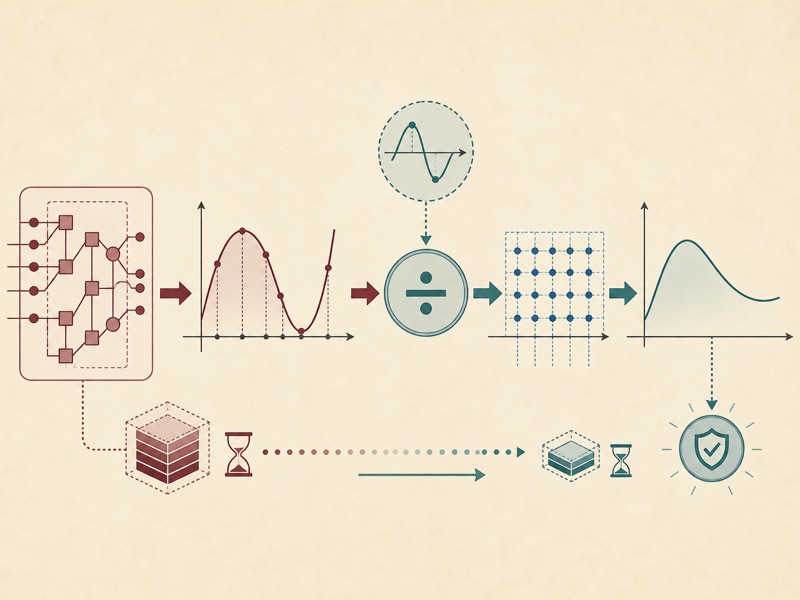
    A proof circuit passes polynomial data through division and an evaluation grid to produce a compact proof.
  2. TACITA: Threshold Aggregation without Client Interaction

    Arthur Lazzaretti, Zeyu Liu, Varun Madathil, Charalampos Papamanthou. CCS, 2026.

    • Private Data Analytics
    • Cryptographic Protocols
    TL;DR

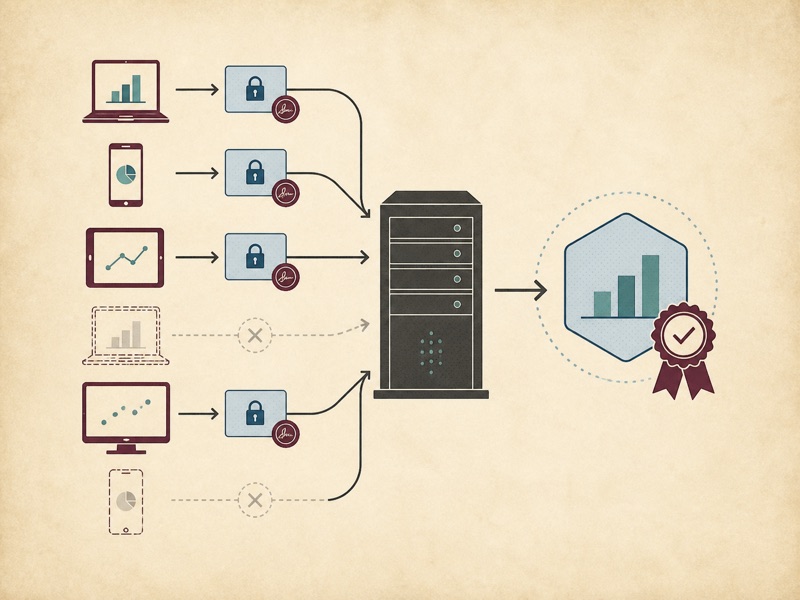
    Can we privately aggregate client inputs with one-shot, constant-size communication, even with dropouts and a malicious server?

    We show this is possible using succinct multi-key linearly homomorphic threshold signatures and adapted silent threshold encryption.

    Clients send sealed contributions to a server that produces one verified aggregate despite dropouts.

2025

  1. PriFHEte: Achieving Full-Privacy in Account-based Cryptocurrencies is Possible

    Varun Madathil, Alessandra Scafuro. ASIACRYPT, 2025.

    • Blockchains
    • Privacy & Anonymity
    TL;DR

    Can we give account-based cryptocurrencies anonymity among all accounts without making transaction size grow with the anonymity set?

    We show full privacy is possible using a compact fully homomorphic encryption based transaction that correctly updates every account obliviously.

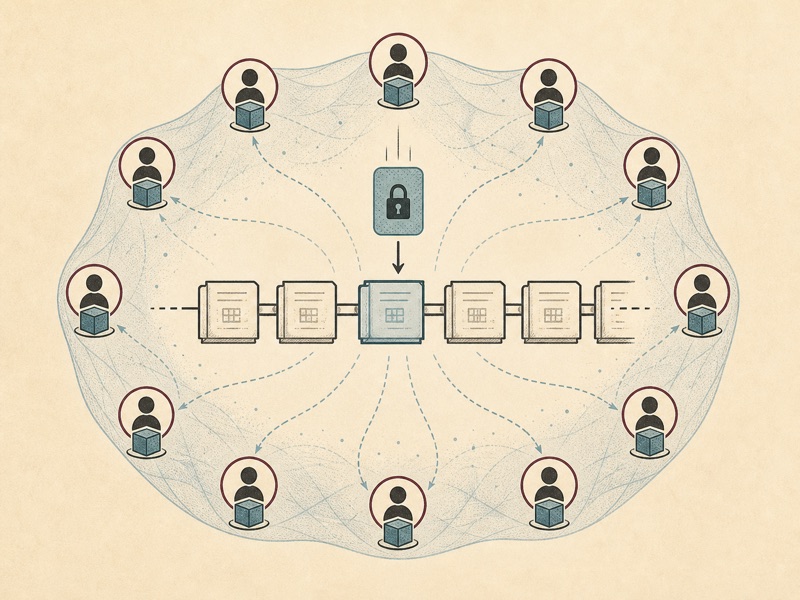
    One compact encrypted transaction privately updates every account in a public ledger.
  2. Round-Optimal Compiler for Semi-Honest to Malicious Oblivious Transfer via CIH

    Varun Madathil, Alessandra Scafuro, Tanner Verber. IACR CiC, 2025.

    • Cryptographic Protocols
    TL;DR

    Can we compile semi-honest oblivious transfer into maliciously secure oblivious transfer in the minimum number of rounds?

    We show the first such compiler in the plain model using correlation-intractable hashing to collapse a general cut-and-choose protocol.

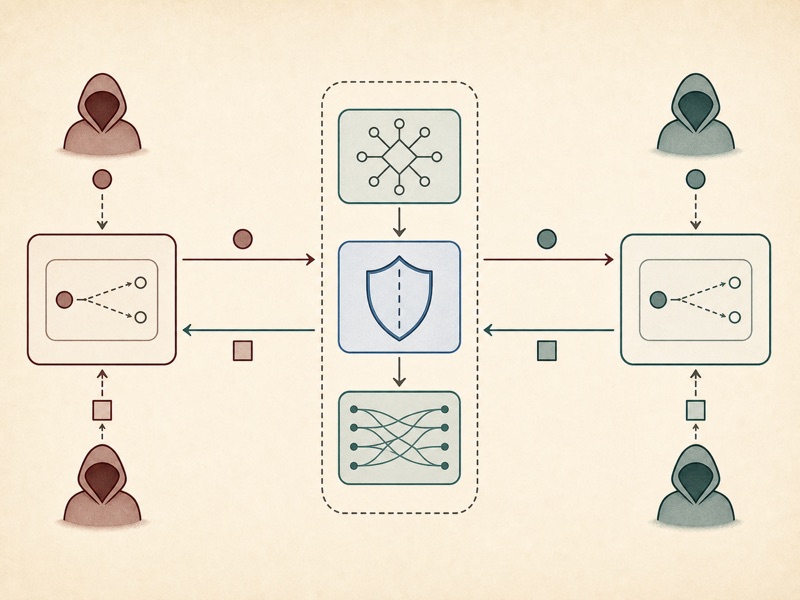
    A compiler hardens an oblivious-transfer exchange between two parties with a hash and cut-and-choose shield.
  3. Scalable Private Signaling

    Sashidhar Jakkamsetti, Zeyu Liu, Varun Madathil. CSF, 2025.

    • Communication Privacy
    • Privacy & Anonymity
    TL;DR

    Can we privately deliver and retrieve signals at million-user scale without revealing the sender or recipient?

    We show orders-of-magnitude improvements using a trusted execution environment and oblivious RAM.

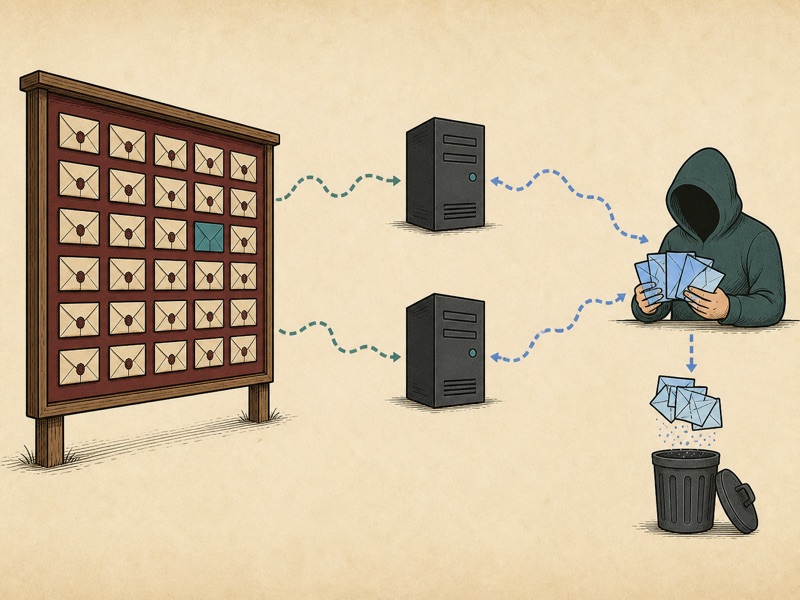
    A sender posts a sealed signal that a protected server routes to one hidden recipient among many.
  4. Secure and Efficient Out-of-band Call Metadata Transmission

    David Adei, Varun Madathil, Nithin Shyam S., Bradley Reaves. Manuscript, 2025.

    • Communication Privacy
    • Cryptographic Protocols
    TL;DR

    Can we securely extend STIR/SHAKEN to legacy telephone networks without broadcasting sensitive call metadata to every participating provider?

    We show this is possible using Sidecar, a distributed privacy-preserving out-of-band signaling system with scalable protocols and tunable decentralization.

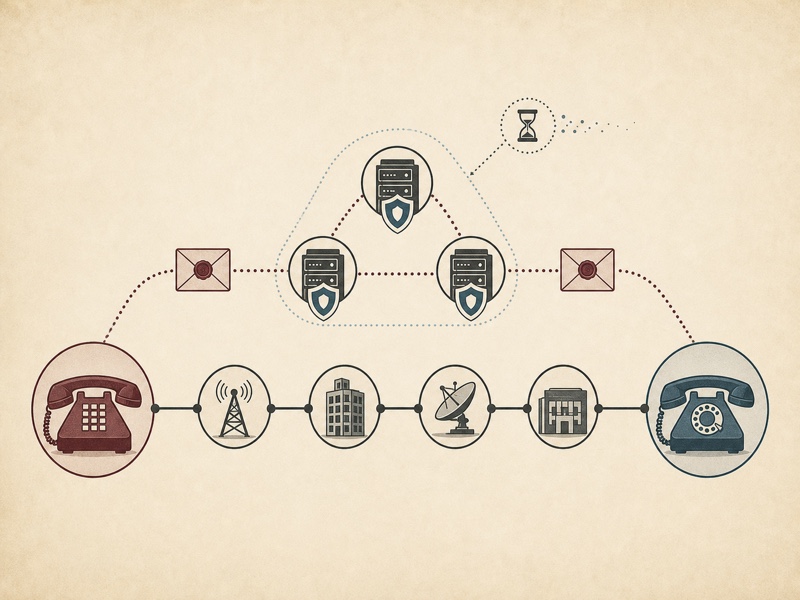
    An encrypted call-metadata packet travels out of band through three protected distributed servers while a voice call crosses mixed telephone networks.

2024

  1. HomeRun: High-efficiency Oblivious Message Retrieval, Unrestricted

    Yanxue Jia, Varun Madathil, Aniket Kate. CCS, 2024.

    • Communication Privacy
    • Privacy & Anonymity
    TL;DR

    Can we retrieve every message for a recipient without linking repeated requests or limiting the message count?

    We show an unrestricted, high-efficiency oblivious message retrieval protocol using two semi-honest, non-colluding servers and efficient cryptographic building blocks.

    A hidden recipient privately retrieves sealed messages through two separate non-colluding servers.
  2. Jäger: Automated Telephone Call Traceback

    David Adei, Varun Madathil, Sathvik Prasad, Bradley Reaves, Alessandra Scafuro. CCS, 2024.

    • Communication Privacy
    • Cryptographic Protocols
    TL;DR

    Can we trace abusive telephone calls in seconds without exposing call parties or carrier business data?

    We show automated, privacy-preserving traceback using witness encryption, oblivious pseudorandom functions, and group signatures.

    Distinguished Paper Award

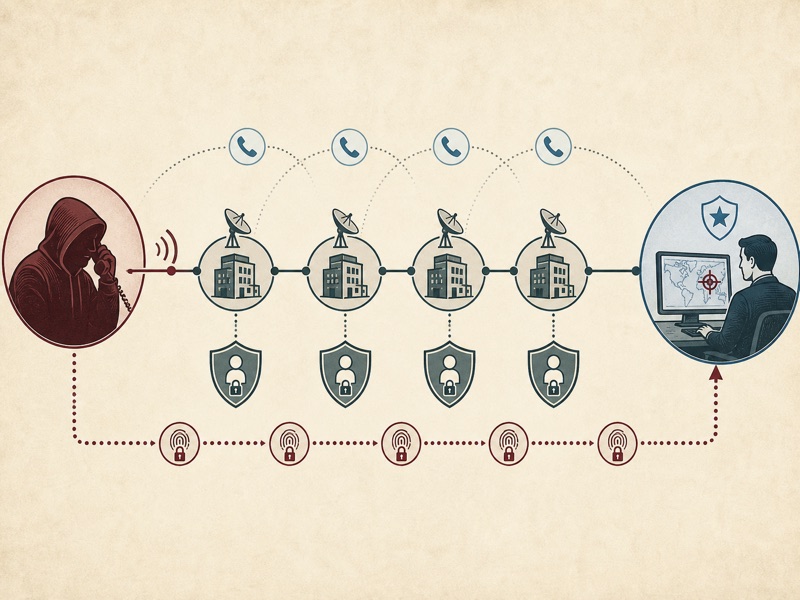
    Cryptographic breadcrumbs trace an abusive call across several carriers to an authorized investigator.
  3. SoK: Privacy-Preserving Transactions in Blockchains

    Foteini Baldimtsi, Kostas Kryptos Chalkias, Varun Madathil, Arnab Roy. Manuscript, 2024.

    • Blockchains
    • Privacy & Anonymity
    TL;DR

    Can we compare what privacy today’s blockchain transaction systems actually provide?

    We show how current systems trade privacy, scalability, usability, and compliance using a taxonomy of confidentiality, anonymity, unlinkability, and cryptographic techniques.

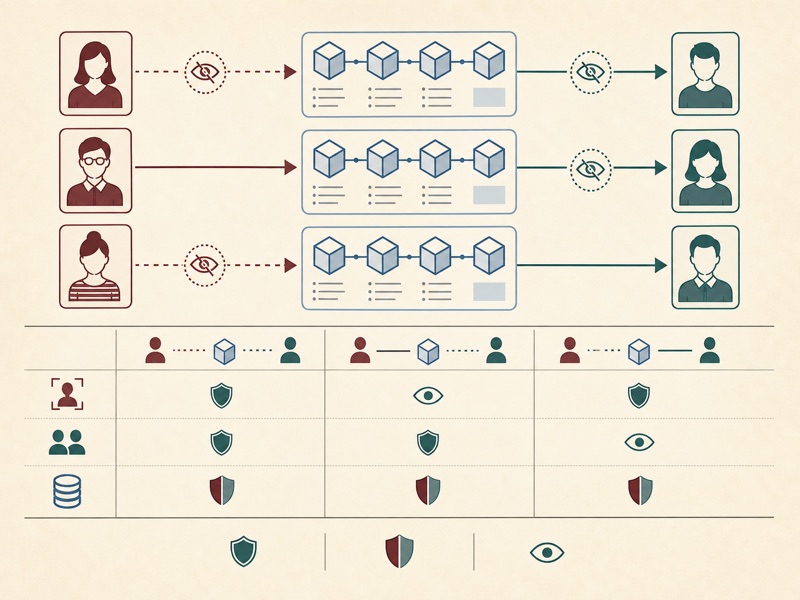
    Parallel blockchain transaction flows compare which sender, receiver, and transaction details remain hidden.

2023

  1. Cryptographic Oracle-Based Conditional Payments

    Varun Madathil, Sri AravindaKrishnan Thyagarajan, Dimitrios Vasilopoulos, Giulio Malavolta, Lloyd Fournier, Pedro Moreno-Sanchez. NDSS, 2023.

    • Blockchains
    • Cryptographic Protocols
    TL;DR

    Can we release a cryptocurrency payment only when a threshold of oracles confirms a real-world event, without requiring oracle coordination?

    We show secure conditional payments using verifiable witness encryption based on threshold signatures.

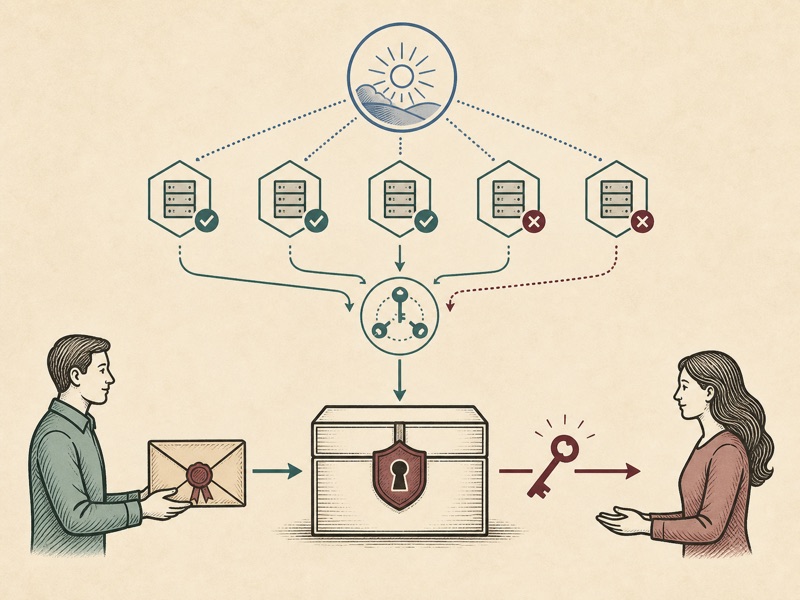
    A threshold of independent oracles combines attestations to unlock a sealed payment for its recipient.

2022

  1. From Privacy-Only to Simulatable OT: Black-Box, Round-Optimal, Information-theoretic

    Varun Madathil, Chris Orsini, Alessandra Scafuro, Daniele Venturi. ITC, 2022.

    • Cryptographic Protocols
    TL;DR

    Can we turn two-round privacy-only oblivious transfer into maliciously secure, simulation-based oblivious transfer without setup or new assumptions?

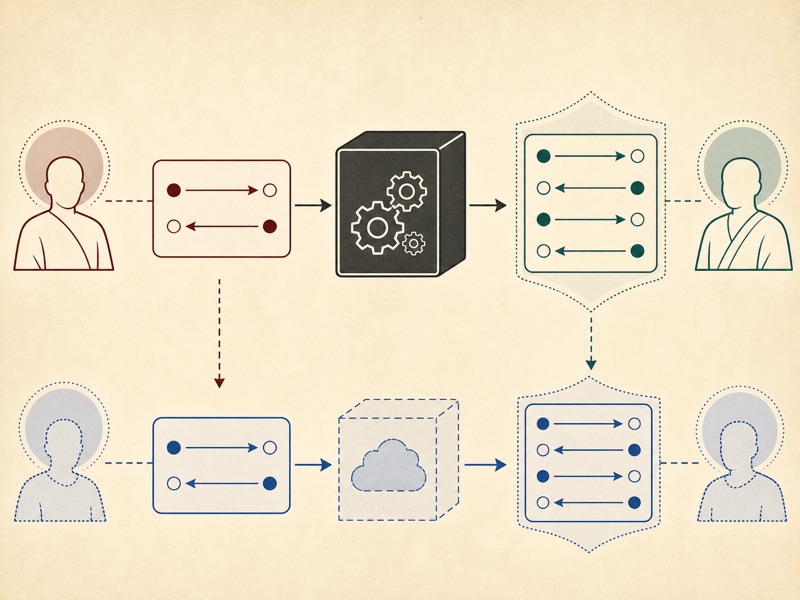
    We show a round-optimal four-round transformation using only black-box access to the original oblivious transfer and information-theoretic techniques.

    A black-box compiler turns a short oblivious-transfer exchange into a protected four-message interaction with a simulated mirror.
  2. Preserving Buyer-Privacy in Decentralized Supply Chain Marketplaces

    Varun Madathil, Alessandra Scafuro, Kemafor Anyanwu, Sen Qiao, Akash Pateria, Binil Starly. CBT, 2022.

    • Blockchains
    • Privacy & Anonymity
    TL;DR

    Can buyers find matching suppliers on a decentralized marketplace without revealing their identity or sensitive requirements?

    We show private interactive matching using a programmable blockchain, anonymous group signatures, and public-key encryption.

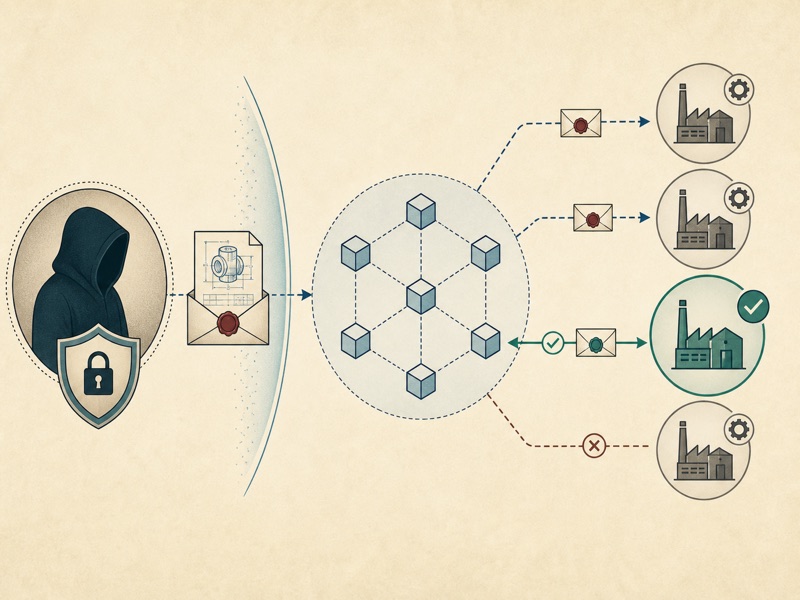
    An anonymous buyer privately sends sealed requirements through a blockchain marketplace to matching suppliers.
  3. Private Signaling

    Varun Madathil, Alessandra Scafuro, István András Seres, Omer Shlomovits, Denis Varlakov. USENIX Security, 2022.

    • Communication Privacy
    • Privacy & Anonymity
    TL;DR

    Can a recipient learn that a public bulletin board contains a message for them without revealing who they are or scanning the whole board?

    We show full-private, constant-work signaling using either a trusted-execution server or two non-colluding servers with garbled circuits.

    Distinguished Paper Award

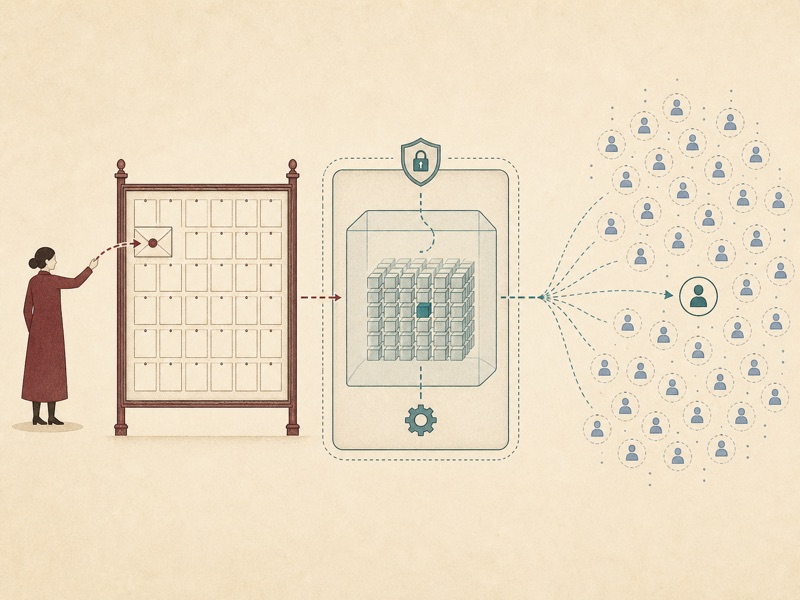
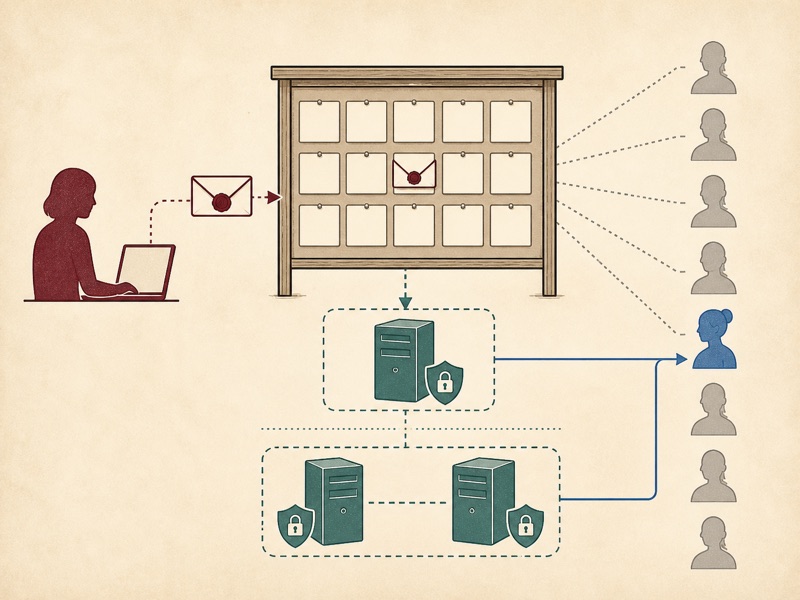
    A sender posts a sealed message that protected helper servers reveal only to its hidden recipient.

2021

  1. Anonymous Device Authorization for Cellular Networks

    Abida Haque, Varun Madathil, Brad Reaves, Alessandra Scafuro. WiSec, 2021.

    • Privacy & Anonymity
    • Communication Privacy
    TL;DR

    Can a phone prove it is not stolen without revealing its permanent equipment identifier?

    We show anonymous blocklist non-membership using RSA accumulators and zero-knowledge proofs.

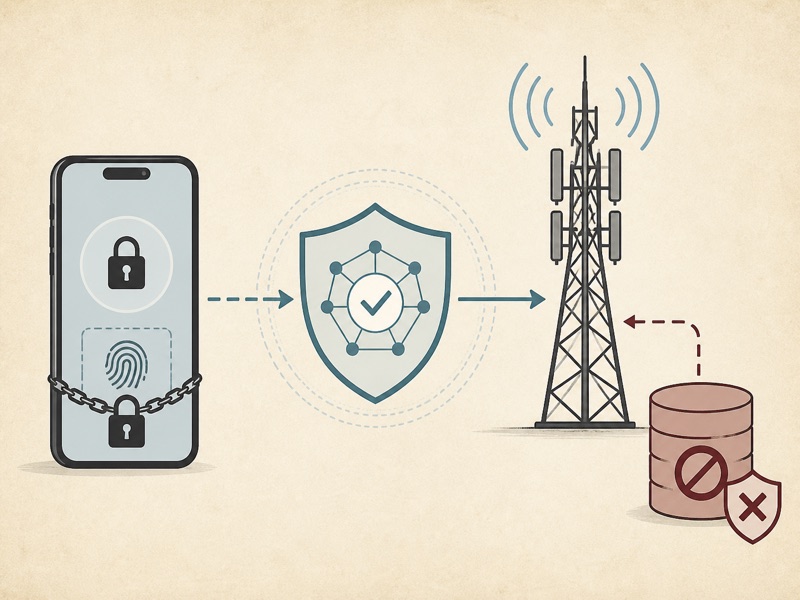
    A phone proves to a cellular tower that it is not blocklisted while its permanent identifier remains sealed.
  2. On the Anonymity Guarantees of Anonymous Proof-of-Stake Protocols

    Markulf Kohlweiss, Varun Madathil, Kartik Nayak, Alessandra Scafuro. IEEE S&P, 2021.

    • Blockchains
    • Privacy & Anonymity
    TL;DR

    Can anonymous broadcast alone hide which stakeholder proposed a proof-of-stake block?

    We show that realistic network delays can reveal the proposer using formal liveness–anonymity lower bounds and tagging attacks.

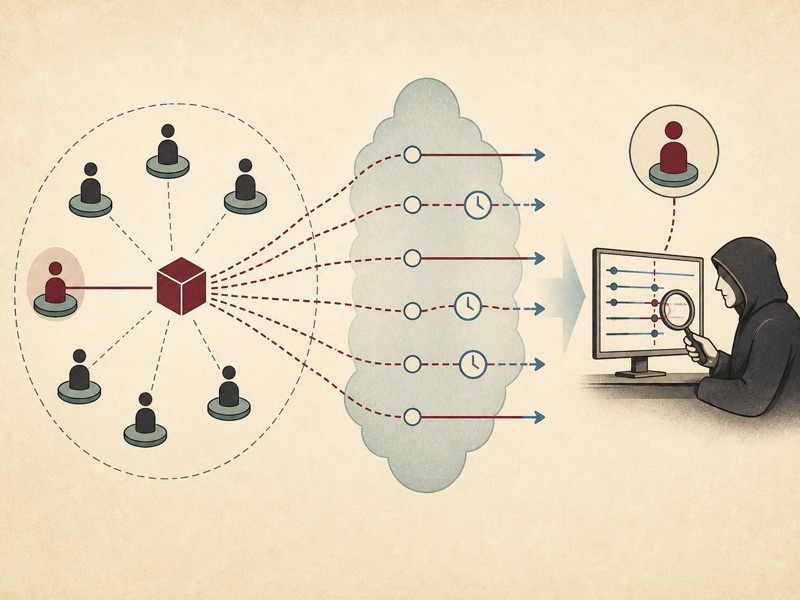
    An observer uses selectively delayed network paths to identify which anonymous validator proposed a block.

2020

  1. Anonymous Lottery in the Proof-of-Stake Setting

    Foteini Baldimtsi, Varun Madathil, Alessandra Scafuro, Linfeng Zhou. CSF, 2020.

    • Blockchains
    • Privacy & Anonymity
    TL;DR

    Can proof-of-stake protocols select eligible participants without revealing their identity or stake?

    We show a modular anonymous-selection functionality using an instantiation based on Algorand’s selection function.

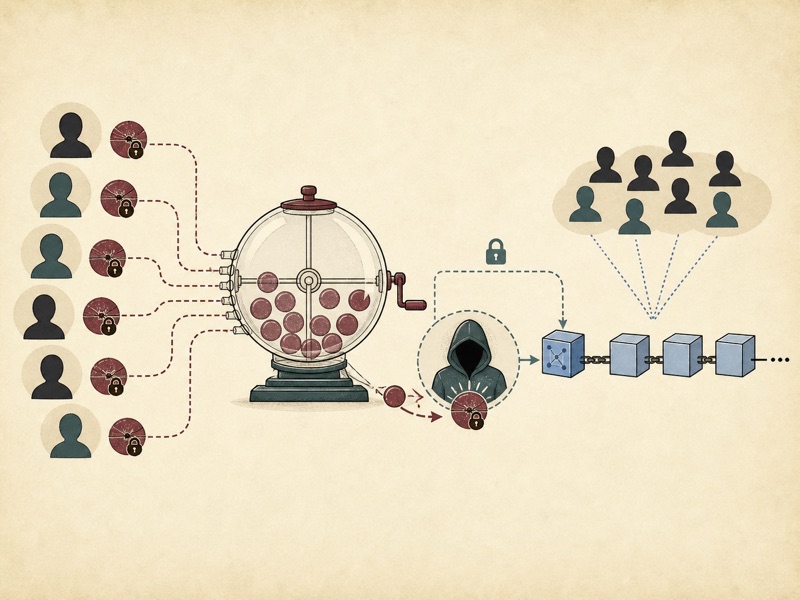
    Anonymous stakeholders enter sealed tokens into a public lottery that privately selects a block proposer.